How to Install a Solar Panel for a House or Apartment
In today’s environment, entrepreneurs and property owners are increasingly considering how to install solar panels to reduce costs and make their businesses energy-independent. Green energy is more than just a trend—it’s an investment in stability and long-term growth. Solar panels allow businesses to optimize costs, protect themselves against rising utility rates, and enhance their reputation.
We need to figure out how many solar panels are needed for an apartment or house, what installation steps to consider, and why eDilo can be a reliable financial partner for such projects. After all, Pay in Installments is a convenient tool for businesses that allows you to invest in equipment today while spreading the financial burden over time.
How many solar panels does a house need?
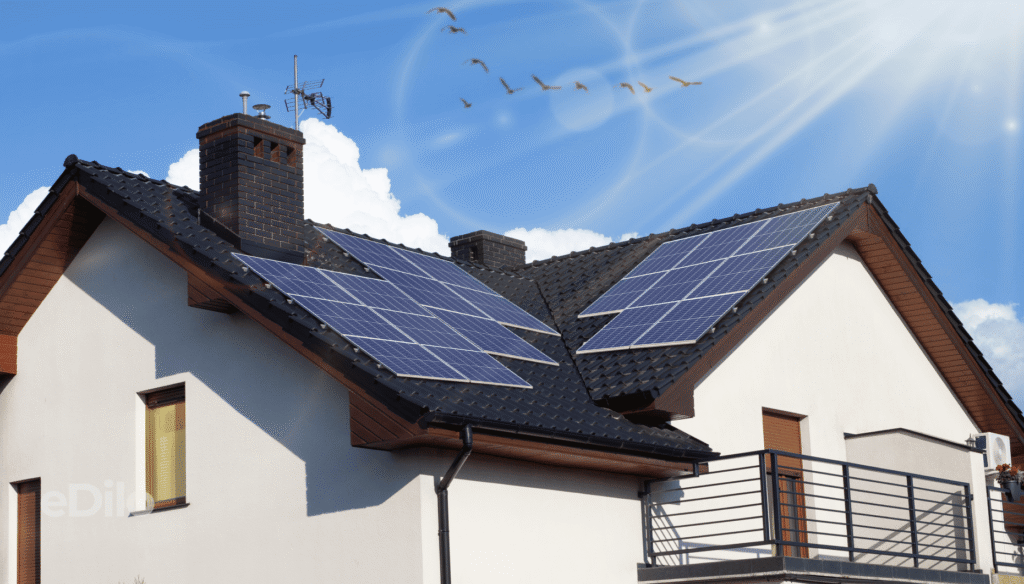
Solar Panels — a device that converts the energy of sunlight into electricity. For business owners, this is a way to save money, increase competitiveness, and make their business more sustainable. But how many solar panels does a home need? The answer depends on several factors:
- the floor area of a private or office building;
- the number of residents or employees;
- the average monthly electricity consumption;
- power rating and type of panels (monocrystalline/polycrystalline solar panels).
To determine how many solar panels are needed for a 100-square-meter home, you should consider the household’s average electricity consumption. You also need to know the number of residents. For a family of 3–4 people with an average monthly consumption of approximately 300 kWh, a solar system with a capacity of 3–4 kW is sufficient. This means that to meet all the household’s needs, you’ll need about 8–10 panels, each rated at 330 W. Such a system can cover daily electricity consumption, and if a green tariff is available, it can partially sell surplus electricity back to the grid through net metering.
For businesses, however, the calculation is always tailored to their specific needs: manufacturing facilities, logistics centers, and retail spaces all have different requirements. It’s important to accurately estimate peak loads and ROI (Return on Investment)—the payback period. That’s exactly why you need to determine how much solar panels cost and finance the system using the eDilo online service: with installment payments, so as not to tie up capital.
See also: Solar Panel Business: How to Set It Up and Calculate Liquidity
Solar Panels for an Apartment
Even in an apartment, it’s possible to find a way to install a solar panel, although the power output of such systems will be lower than that of standalone systems for houses. The options here are limited, so compact solutions are used:
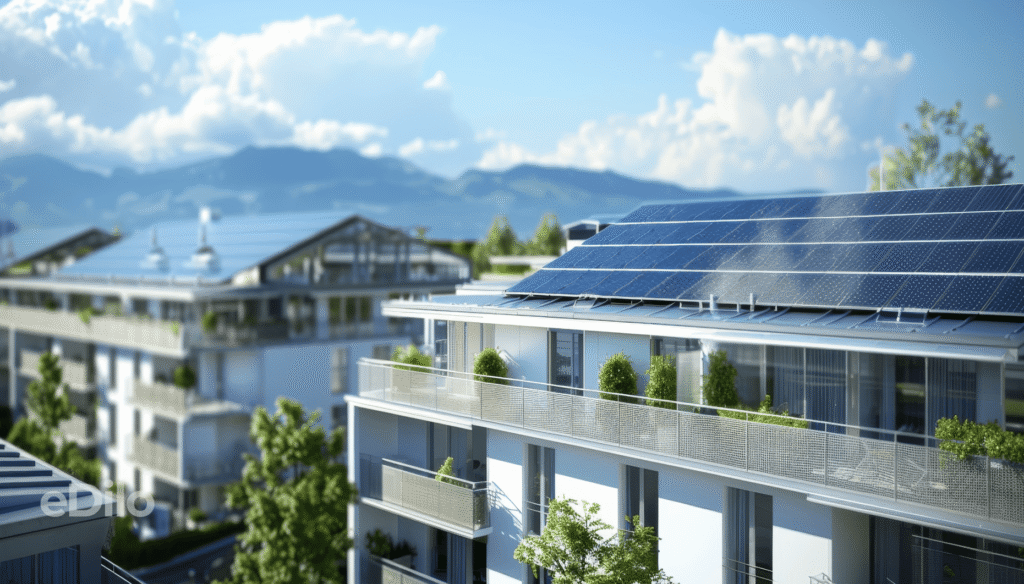
- balcony systems that can be mounted on railings or on the building facade;
- Portable solar panels for powering small electronic devices.
Many people wonder whether it is possible to install solar panels on the roof of a high-rise building. Yes, it is, but the homeowners’ association should handle the installation.
For entrepreneurs in the apartment rental or small hotel complex sectors, this could be a powerful marketing tool: savings on energy costs plus positioning as an eco-friendly business.
How to Install Solar Panels: Steps
The installation process consists of several steps:
- Inspection of the roof or balcony. Before installing solar panels, you need to assess the load-bearing capacity of the structures, the available installation area, and whether there is any shading from trees or neighboring buildings.
- Choosing a location. The ideal setup is to orient the panels toward the south at a tilt angle of 30–35°. This allows for the most efficient capture of solar radiation.
- System Design. At this stage, the cost of a single solar panel is calculated, and the number of panels, batteries, an inverter, and mounting hardware are selected.
- Installation. Special aluminum structures are used to mount the solar panels, ensuring the system’s reliability and durability. All components are connected with cables. The system is then tested.
- Connection and Setup. The final step involves integrating the system with your home or business network, as well as registering for the Net Metering program (if necessary).
For businesses, it is important to implement projects quickly and avoid cash flow gaps. This is where eDilo’s experts help their partners: by paying in installments, businesses can immediately cover the costs of equipment and installation while maintaining financial flexibility.
See also: Tender: What It Is and How to Participate
Which inverter should I choose for my solar panels?
The device converts the direct current generated by the panels into alternating current suitable for use in the grid. It affects the efficiency of the entire system, so the question of which inverter to choose for solar panels arises immediately after determining the number of solar panels.
Main types of devices:
- Grid-connected. Used in buildings connected to the public power grid. They allow users to feed excess energy back into the grid through net metering and receive compensation.
- Off-grid. They operate independently of the central power grid. They are used in locations where there is no connection to the public power grid. They require batteries to store energy.
- Hybrid systems. They can power the home directly, feed excess electricity into the grid, and store electricity in batteries.
For an apartment, a grid-tied inverter is usually sufficient, since the space available for installing panels is limited. For a single-family home, a hybrid system is the best choice: it allows you to save money, sell excess energy, and have a backup in case of power outages—all at the same time.
How to Connect Solar Panels
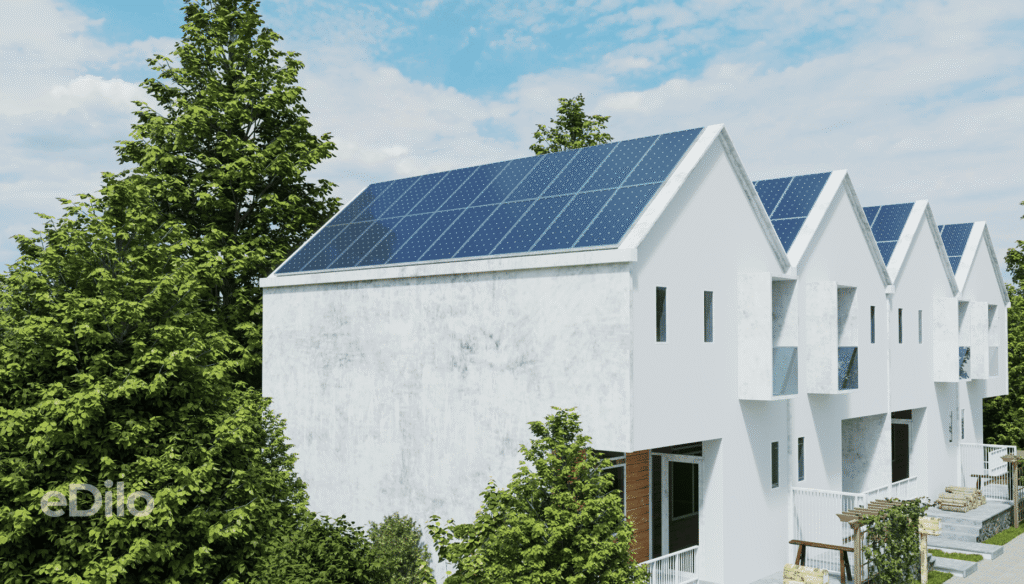
The system should be connected as follows: Solar Panels → Inverter → Battery → Grid. Each component of the circuit performs its own function:
- Solar panels generate direct current.
- The inverter converts it into alternating current for household use.
- The battery stores excess energy to provide power at night or during outages.
- The grid allows you to power your home directly and feed excess power back into the grid, provided your inverter supports this feature.
Before connecting solar panels, you need to consider all the details. Mistakes can lead to power loss, rapid wear and tear on the equipment, and even inverter failure.
It is important for anyone investing in solar energy to choose reputable suppliers and certified installers. These professionals know exactly how to install solar panels properly.
Tips for First-Time Installers
Installation requires knowledge of electrical engineering and experience. For businesses, the risks of downtime or equipment damage are too high, so it’s best to entrust the work to a professional company.
Before installing solar panels, you should consider the following points:
- the quality of fasteners and materials (aluminum and stainless steel offer better durability);
- the presence of certificates for the solar panels and the inverter;
- Supplier warranty (at least 10 years on the panels and 5 years on the inverter).
You will also need additional equipment: batteries (lithium iron phosphate or gel) and charge controllers. The former store energy. The latter regulate the battery charging process, protecting the batteries from overvoltage.
Conclusion
Installing solar panels, an inverter, and auxiliary equipment allows a company to become energy-independent, reduce the risk of cash flow gaps, and even generate additional revenue through net metering.
However, the issue of financing remains important. Amid economic instability and limited access to bank loans, Ukrainian entrepreneurs need alternative solutions. One such tool is the installment payment option for businesses offered by the online service eDilo.
Why is this beneficial:
- no collateral or surety;
- The decision is made within 30 minutes;
- payment plan — up to 12 months;
- The seller receives the full amount on the day of shipment.
For small and medium-sized businesses, this means the ability to install solar panels and equipment right away without tying up capital. As a result, the company achieves energy independence today, while spreading its payments evenly over time.
Актуальні
запитання
How many solar panels are needed for a 100 m² house?
For an area of 100 m² For an average monthly consumption of 250–300 kWh, 8–10 panels with a capacity of 330 W each are usually sufficient. The exact number depends on the home’s energy efficiency and the region.
Which inverter should I choose for solar panels in a single-family home?
A hybrid inverter would be the best solution, since it allows you to power your home, feed excess energy back into the grid, and store it in batteries all at the same time.
Will solar panels be enough to fully power the house?
That is, if you calculate the number of panels correctly and add a battery for energy storage. In most cases, a 5–10 kW system can provide 100% of the electricity needed for a single-family home.
How long do solar panels last?
The average service life is 25–30 years. Even after the warranty period expires, the panels retain approximately 80% of their power output.



More about business
and finance
Read more

Which Chinese Tractor Is the Best to Buy: Top 5 Models
Solar Panel Business: How to Set It Up and Calculate Liquidity

How to Choose a Business Idea in 2026: Top Ideas for Ukraine
Military Tax in Ukraine in 2025
A $5,000 Business in 2026: How to Start a Business with Minimal Risk
How to Prepare Your Business for Black Friday 2026: Purchasing Without Straining Working Capital
How to Prepare Your Business for the Fourth Quarter: A Financial Checklist for Executives
How to Avoid Stalling Business Growth Due to Large Supplier Invoices
How Businesses Can Prepare for the Peak Sales Season in Fall and Winter