The Whole Truth About Solar Panels: What They Are and How They Work
The truth about solar panels is that they are not just a trend driven by current environmental concerns, but a strategic investment that enhances financial stability and business competitiveness in the long term. The use of photovoltaic modules reduces energy costs by 40–75% (according to Maxbo, a comprehensive solutions provider for major European clients), ensures energy independence from rising rates and grid outages, helps improve a company’s image through its eco-friendliness, and allows for additional income from selling surplus energy. In this article, we’ve compiled as much useful information as possible about how solar panels work and why they’re a reliable investment in the future. We’ll help you understand the basic concepts and debunk common myths.
What Are Solar Panels and How Do They Work?
Photovoltaic modules are high-tech devices that convert natural light into energy used to power devices, equipment, and entire systems. In a balanced, grid-connected configuration, the panel generates electricity during the day, and it is used primarily at night. To understand how these systems work, it’s important to understand the phenomenon underlying the operation of solar cells. This is the photovoltaic effect:
- Photons (particles of light) strike the surface of the panel, where they are absorbed by a semiconductor material—such as silicon.
- The energy of the photons is transferred to the atoms of the semiconductor—as a result, electrons are released from their bonds. They become free particles, and holes are formed.
- The module’s design incorporates a special p-n junction. It separates the free electrons and the resulting holes, creating a potential difference between them. In effect, it works on the same principle as a standard battery.
- The potential difference causes electrons to move in one direction. This creates a directed current.
In fact, solar panels are devices on whose surface conductors collect the generated electrical energy. This energy can be used to power devices or equipment immediately, or it can be stored in batteries for future use.
To fully understand what a solar panel is and how it works, it is important to familiarize yourself with the system’s main components and their functions. Among the key elements are:
- The panel itself. This is the most important and valuable part of the energy system. Its function is to convert radiation into electrical energy.
- Inverter. The direct output of solar energy is 12, 24, or 48 V DC. To operate appliances and equipment, a 220- or 110-volt AC power source is required. It is the inverter that converts the energy within the system.
- Batteries. Understanding what solar panels are is closely linked to the definition of energy storage devices. Batteries store the electrical current generated by the panel when there is no immediate need to use it. They are designed for temporary energy storage.
- Mounting system. A set of mounting components (frames, profiles, brackets, clamps, bolts, and nuts) ensures that the panels are securely fastened to various surfaces. For example, on a roof or on the ground. The mounting system does more than just hold the panel in place. It ensures the efficient use of solar panels during energy generation by maintaining the optimal tilt angle.
Understanding the components that make up a photovoltaic module provides a clear picture of how it works. Let’s take a closer look at the key points below.
How a Solar Panel Works: A Step-by-Step Explanation
The principle behind a solar cell based on the photoelectric effect involves the following main steps:
- Absorption of photons by the module’s components.
- Direct current (DC) generation.
- Converting direct current (DC) to alternating current (AC) using an inverter.
- Electricity consumption in manufacturing and in the office. At the same time, unused energy is stored in batteries (Solar Battery).
A clear understanding of how solar panels work gives you an idea of the complexity and high cost of such systems. Since this cost may be prohibitive for some companies, the eDilo service allows businesses to purchase everything they need without a financial burden by splitting the payment into installments. We help you get the system you want today.
The Whole Truth About Solar Panels: Debunking the Myths
The widespread use of solar energy, combined with a lack of awareness about photovoltaic panels, their structure, and their features, creates the conditions for various myths to emerge. We are debunking these myths so that businesses have access to the full truth about solar panels.
Solar panels do not work in winter or in bad weather
This is one of the most common misconceptions. Many business owners wonder whether solar panels work in the winter and during the off-season. In reality, there’s no need to worry that the panels will be idle during the cold season or in cloudy weather. Current technologies allow for energy generation even from diffused light. However, it’s important to understand the nuances of how solar panels operate in winter. For example, snow, rain, and overcast skies reduce the efficiency of these systems. Their efficiency can drop by a factor of 2–3. Cold weather, on the other hand, actually increases the panels’ output by reducing heat loss.
Solar panels are harmful to the environment
In fact, the panels are safe because they do not emit ionizing or significant electromagnetic radiation. During operation, they do not release harmful gases or smoke, nor do they produce waste. Photovoltaic modules do indeed contain hazardous substances such as lead and cadmium. However, the amounts are extremely small, and these substances can only be released into the environment during the production or disposal of the panels. Both processes are safe thanks to modern technologies and innovative solutions.
See also: Solar Panel Business: How to Set It Up and Calculate Liquidity
It is not possible to charge the panel through glass
This myth is not true. The modules contain fragile silicon components—conductors. They require protection from harmful external factors: dust, moisture, hail, and falling branches. Manufacturers use glass to provide this protection. It serves as an effective barrier against mechanical damage and, at the same time, a reliable way to create a sealed environment.
However, buyers often wonder: does the solar panel charge through the glass? The answer is yes, and here’s why. Modern solar power stations use special tempered glass with a high degree of transparency (up to 92–93%). It is optimized to transmit the solar spectrum necessary for energy production. Thanks to a hydrophobic coating, the glass does not fog up, and water droplets do not accumulate. This ensures the panel’s high efficiency.
The photovoltaic module is powered solely by sunlight
This myth is also untrue. The modules operate based on the photoelectric effect. Their conductors respond to any intense light source, not just natural light. Therefore, the answer to the question—“Can a solar panel be charged by a light bulb?”—is yes. However, to achieve the desired result, you need to use a very powerful light source. A standard incandescent light bulb will not work.
You might wonder: why charge the module using an artificial light source? This method is often used to check the functionality of the system’s solar cell and battery. For example, when there isn’t enough natural light.
Advantages and Disadvantages of Use
We have compiled the key advantages and disadvantages of solar panels into a table to make the information easier to understand.
| Advantages | Disadvantages |
| Environmental Friendliness: “Green” energy does not emit harmful gases into the atmosphere and does not contribute to global warming. According to estimates by the Ministry of Energy and the Environmental Protection Agency, as cited by EnergySage (U.S.), a 2 kW system generates approximately 2,600 kWh per year: reducing CO₂ emissions by 1.9 metric tons. The Environmental Protection Agency has developed a formula for accurate calculations of carbon emission reductions. | The High Cost of Off-Grid Stations: Usingthese modules requires a significant initial investment. The costs include the purchase of equipment, its installation, connection, and maintenance. The cost of a single system depends on its type, rated power, and configuration. |
| Cost Savings: Afree energy sourcehelps reduce expenses. According to SUNSAY NRG, even a small system paired with a storage unit can help cut bills by 30–50% and protect against power outages. It’s important to do the math correctly and choose reliable equipment. | High Energy Storage Costs: Batteriesremain expensive and require periodic maintenance, including electrolyte replenishment, monitoring of the condition of the plates, and checking the charge level. |
| Independence: Solar energydoes not depend on fuel supplies or the stability of power grids. It is renewable and accessible to everyone. If you install your own solar system, you won’t have to worry about uninterrupted power or rising rates. | Use of Floor Space Panels take up a lot of space. The larger the system, the more floor space needs to be allocated for it. An alternative solution is to use integrated modules (for example, on building facades or roofs). |
| Government Incentives: In Ukraine, incentives for the development of alternative energy are enshrined in law. In addition to cost savings, plant owners have the opportunity to earn money by selling electricity. | The Need for Regular Cleaning: Ifdust, dirt, snow, or moisture accumulates on the panel’s surface, it reduces the system’s ability to convert energy. You can restore this ability by cleaning the surface of the equipment. |
| Increase in an Asset’s Value During Valuation: Havingan on-site power plant enhances the investment appeal of real estate—such as businesses, farms, and commercial buildings. | The Impact of Geography and Weather Conditions on Power Generation: Oncloudy days and during the winter months, power generation can drop significantly. |
In addition to the advantages mentioned above, there are also factors such as a wide range of applications, ease of integration into the power grid, silent energy production, and the possibility of grid connection. All of these factors encourage the decision to install alternative energy sources.
See also: Business Processes: Concepts, Types, and Examples
Are Solar Panels Harmful to Humans?
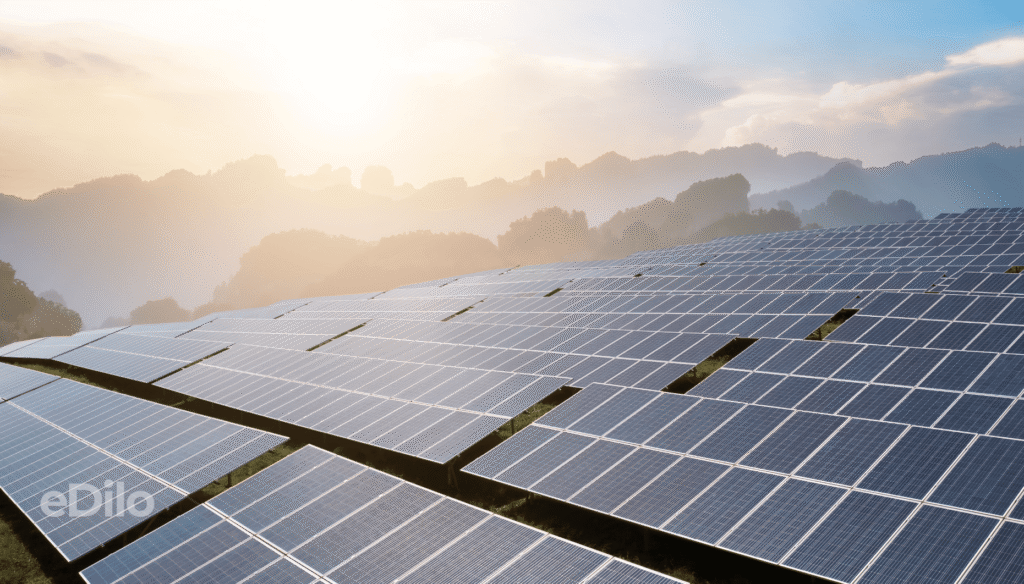
Photovoltaic modules pose no danger to humans, animals, or the environment during operation. They do not emit harmful radiation, and the panels do not produce toxic emissions or waste; on the contrary, they reduce air and water pollution. To assess whether solar panels are harmful to humans, it is important to recognize the special responsibility involved in their disposal. Because their design includes elements made of toxic components, it is crucial to strictly adhere to proper cleaning and disposal procedures.
Energy independence is your competitive advantage. Optimize your costs effectively to pay less for electricity and redirect those funds toward scaling your business.
An Investment in the Future
Solar panels can provide your business or office with clean, free energy for many years to come. By investing in these panels, you not only reduce your electricity costs but also make a significant contribution to environmental sustainability. Given where solar panels are already being used today, it’s hard to deny that these systems are the future. They deliver real economic benefits and, for forward-thinking entrepreneurs, represent an investment in the stability and growth of their company.
Increase your funding with eDilo: install state-of-the-art solar power generation systems on favorable terms. With us, the path to optimization becomes much simpler and more accessible. Check out one of our success stories featuring a collaboration with eDilo. By purchasing a photovoltaic module through our service, a nonprofit organization invested in energy efficiency, improving its financial situation. eDilo—we create opportunities for your success.
Актуальні
запитання
How long do photovoltaic modules last?
High-quality photovoltaic modules have a service life of 25–30 years or more. Their efficiency decreases by 1–2% annually. However, reputable manufacturers guarantee that at least 80% of the original capacity will be maintained after 25 years of operation.
Do solar panels require maintenance?
Photovoltaic modules require regular maintenance to ensure their efficiency and extend their service life. This is a task for certified specialists who use professional equipment. It involves periodically cleaning the modules of debris, assessing the system’s condition, identifying potential problems, and resolving them.
What is the payback period for an investment in photovoltaic modules?
According to EURO Solar, which specializes in solar energy solutions, the payback period for investments in photovoltaic panels (commercial projects) ranges from 3 to 7 years. This depends on the size of the facility, energy consumption patterns, tariffs, and incentive programs.
Can I install solar panels myself?
Theoretically, yes. However, this decision carries a great deal of responsibility. Reasons: compliance with safety regulations and electrical standards, as well as preliminary calculations to determine the location with optimal sunlight exposure and tilt angle. For systems with a power rating exceeding 600 W, the involvement of certified specialists is mandatory when connecting them to the grid.
For smart savings and guaranteed safety during solar panel installation, the best option is to use the eDilo service. We provide immediate service with the option to pay in installments.



More about business
and finance
Read more
Which Chinese Tractor Is the Best to Buy: Top 5 Models
Solar Panel Business: How to Set It Up and Calculate Liquidity

How to Choose a Business Idea in 2026: Top Ideas for Ukraine

Military Tax in Ukraine in 2025

A $5,000 Business in 2026: How to Start a Business with Minimal Risk

How to Prepare Your Business for Black Friday 2026: Purchasing Without Straining Working Capital

How to Prepare Your Business for the Fourth Quarter: A Financial Checklist for Executives

How to Avoid Stalling Business Growth Due to Large Supplier Invoices

How Businesses Can Prepare for the Peak Sales Season in Fall and Winter