What Is ESG: How to Implement Sustainability Principles in Business

Today, it’s important to clearly understand what ESG is, because it’s no longer just a buzzword—it’s your only ticket to European markets and a mandatory requirement for accessing cheap capital in 2025. According to DiXi Group, 87% of Ukrainian companies support this approach, but 77% admit they lack the resources to get started: on the one hand, there’s the war, blackouts, and a shortage of personnel. On the other—the strict requirements of international partners, who want to see not just profit, but “sustainable development.”
At eDilo, we offer a way out of this trap: don’t choose between survival and growth—modernize your business right now through installment payments, turning environmental standards into real profit without the red tape.
ESG: Basic Concepts and Why It Matters for Business
What is ESG? ESG is like an X-ray of your business. While a financial report shows how much money you’ve made, ESG reveals at what cost—and whether you’ll be able to make the same amount tomorrow. Investors understand this: if a factory dumps waste into a river, it will be shut down or fined. If a plant neglects safety, there will be strikes. If a CEO hires friends and relatives for key positions, the business will be inefficient.
That is precisely why ESG ratings have become just as important as credit histories. They are an indicator of reliability. In Ukraine, which is rapidly integrating into the European space, the rules of the game are changing right before our eyes. Major international players—from IKEA to Volkswagen—require their suppliers to comply with sustainability standards. Want to be part of their supply chain? You have to play by the rules.
However, it’s not just about exports. Ukrainian consumers are changing, too. People no longer want to buy from brands that are “toxic”—either literally or figuratively. They’re using their money to support those who help the military, look out for their team, and don’t harm the environment.
Here are the real benefits of implementing ESG criteria:
- Access to funding. International banks (EBRD, IFC) and funds provide grants and low-interest loans for “green” projects. Without an ESG strategy, these doors remain closed.
- Long-term savings. Energy-efficient equipment costs more up front, but saves millions on utility bills.
- Business Security. A transparent ownership structure makes raider attacks more difficult.
- A line of talented people. Young professionals won’t work at a “Soviet-style” office—values are important to them.
- Customer loyalty. A brand with a social mission is more likely to be forgiven for its mistakes.
So, ESG isn’t charity. It’s a pragmatic investment in sustainable business development and a safeguard against your business becoming obsolete tomorrow.

ESG criteria: environmental, social, and governance aspects
Let’s break down the ESG criteria piece by piece—what each letter stands for and what to do about it.
E — Environmental (Ecology)
This is all about your impact on the planet. However, in our reality, it’s first and foremost about energy independence. When rockets strike power plants, the owner isn’t thinking about global warming—he’s thinking about keeping the machines running. And that’s where the interests of the environment and business align.
Installing solar panels, replacing old boilers with modern ones, and performing thermal retrofits—these are all purely “E” components. The less you consume from the grid, the lessCO2 is released into the atmosphere. And you save money in the process.
This also includes waste management. Do you recycle paper? Do you recycle plastic? Do you use recycled materials in your packaging? European regulators will soon start asking about the “carbon footprint” of every product.
S — Social (Society)
It’s about people. During the war, this aspect became the most important one. S isn’t just about paying salaries on time. It’s about how you treat your team and the community:
- Do you have a bomb shelter?;
- Do you provide assistance to mobilized employees and their families?;
- Are there any programs to help veterans reintegrate?;
- How do you support the mental health of your team?
The answers to these questions matter more than any bonuses or benefits packages, because they reveal the true nature of the business. It is based on these answers that your team and society decide whether it’s worth doing business with you in the long run.
Inclusivity is another huge challenge. Can a veteran with a prosthetic limb work in your office or on the production floor? Is your store accessible to someone in a wheelchair? This is no longer just a matter of “ticking a box”; it’s a matter of respect for our heroes and upholding basic human rights.
G — Governance
Transparency is more valuable than profit today—investors put their money not into ideas, but into reliable systems. Financial integrity, including the payment of all taxes, has become the basic test of adequacy. Transparency regarding ownership is critically important—full disclosure of beneficial owners ensures protection from sanctions. Decisions must be made collectively, through supervisory boards.
Anti-corruption policy is also part of G. If your managers are taking kickbacks from suppliers, it’s not just stealing money from the owner—it’s a blow to the G rating. Investors want to see that the company operates according to the law, not just “unwritten rules.”
A checklist to evaluate yourself:
- Environment. Do you know how much energy you consume per unit of production? Do you have a plan to reduce it?
- Society. Safe working conditions? Formal employment? Support for local initiatives?
- Management. Do you have a code of ethics? Transparent reporting? Do you screen your business partners?
Ignoring even one of these points leaves a business limping—it can run, but not very far or for very long.
See also: How to Choose a Promotion Strategy and Develop a Marketing Plan for a Startup
How to Develop and Implement an ESG Strategy
Many people think that a strategy is just a thick document sitting on a shelf. No, a true ESG strategy is a plan of action for every day.
The first step is a thorough audit. Take an objective look at your business. Where are the gaps? Are old windows letting heat escape? Is employee turnover through the roof? Are you keeping track of your books in a notebook? Mark this as “Point A.”
Next—the search for “quick wins”:
- replace the light bulbs with LEDs;
- install recycling bins;
- Introduce a transparent bonus system.
This will energize the team with the momentum of its early successes.
The third stage is systemic change. This is where we run into financial constraints. Replacing a power line with an energy-efficient one or installing a solar power plant is expensive. The owner says, “I don’t have the money; let’s do it later.” That’s a mistake—by “later,” the competition will be fierce.
At eDilo, we’ve created a tool that removes the main barrier—the need to pay the full amount up front. You choose the equipment, we pay the supplier, and you pay us back in installments.
In fact, you’re paying for the upgrade with the money that this equipment has already saved you. This is smart financial planning, which consists of clear steps:
- Appoint someone to be in charge. If “everyone” is responsible for ESG management, then no one is.
- Set measurable goals. Not “become eco-friendly,” but “reduce electricity consumption by 20% by the end of the year.” Not “love your employees,” but “reduce employee turnover to 5%.”
- Get your team on board. Explain to people why this is necessary. When an employee understands that sorting trash isn’t just a whim of the boss but a contribution to the future, they do it willingly.
- Communicate with your partners. Let your customers and suppliers know about these changes. This will strengthen your brand.
Remember: the most expensive strategy is no strategy at all. Haphazard moves always cost more than a well-thought-out plan.
ESG Risks: How to Avoid Pitfalls and Losses
You might say, “What are ESG risks if I’m a small business? Why do I need all this? No one’s going to inspect me.” That’s a dangerous illusion. The world has become global, so if you supply parts to a factory that exports to the EU, you’re already “in the crosshairs.”
The biggest scare and the reality of the near future is the CBAM (Carbon Border Adjustment Mechanism). Starting in 2026, Europe will introduce a “carbon tariff.” If your product is manufactured with highCO2 emissions (or you cannot prove that they are low), you’ll have to pay an additional fee at the border. And your product will simply become uncompetitive in terms of price.
Other risks:
- A financial crunch. Banks are already implementing ESG screening. If your business is “shady” or lacks transparency, you’ll either be granted a loan at an exorbitant interest rate or denied one altogether. Investors will simply walk away.
- Workforce risk. People don’t want to work in dangerous conditions or in places where they aren’t respected. Given the labor shortage in Ukraine, losing the battle for talent is tantamount to the death of a business.
| Aspect | The Risk of Ignoring | Opportunity (ESG) |
| Regulatory | Carbon Border Adjustment Mechanism (CBAM), penalties for noncompliance with environmental standards | Unrestricted exports to the EU without additional taxes, and a streamlined certification process |
| Financial | High interest rates on loans, denial of financing, loss of investors | Access to grants, low-interest loans, and cashback from international funds |
| Human Resources | High employee turnover, difficulty in hiring professionals | A strong employer brand, a long line of candidates, and high employee loyalty |
This shows that the cost of inaction is significantly higher than the cost of change. An ESG rating is your armor in today’s market.
See also: 5 Ways to Scale Your Business: A Step-by-Step Strategy for Increasing Profits
Success Story: The True Story of the “37 Karat” Homeowners’ Association in Kyiv
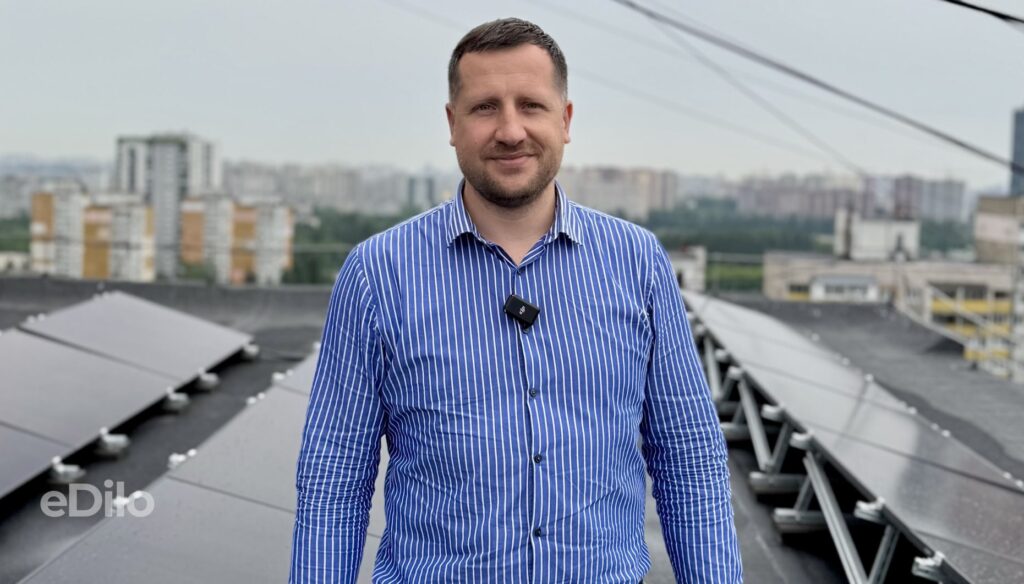
ESG isn’t just about factories and offices. The principles of sustainability are universal: they work wherever people come together for a common goal, even if they’re just neighbors in the same building. This example proves that a community can be more effective than a corporation when it comes to survival and energy independence.
Problem:
- Constant power outages have made life a living hell;
- The elevators aren’t working, there’s no water, and the heating is in question.
Vasyl Lytvyn, chairman of the homeowners’ association board, understood that they needed to install a solar power plant to meet at least their critical needs (elevators, heating substations, and lighting in the common areas). However, the cost is significant, and it’s unrealistic to collect the entire amount from residents all at once.
Solution:
We’ve found a verified partner. This ensures that the panels and batteries won’t burn out in a month and that the inverters will work as they should.
A combined funding scheme was used. Part of the costs (300,000 UAH) is covered by the city’s compensation program, 70% of the equipment cost comes from a grant from the “GreenDIM” Energy Efficiency Fund, and the remaining portion is paid by the homeowners’ association.
Since grants and reimbursements come later, but the equipment has to be paid for now, the eDilo service came to the rescue. The homeowners’ association arranged an installment plan for the equipment. This made it possible to launch the station immediately, without waiting for bureaucratic procedures.
Residents have already received working elevators, heating units, and lighting in the building lobby despite the power outage, and they are paying for this in manageable installments, which will later be offset by compensation and savings on electricity.
Result:
- Autonomy—the house remains functional even during a blackout;
- financial security — no budget shortfall;
- Speed — everything was handled quickly, transparently, and without a pile of paperwork;
- Trust—residents see the results of the board’s work.
This story shows that ESG isn’t just for the big players. An ordinary home can become energy-independent and sustainable if you use the right tools. Here at eDilo, we’ve already helped dozens of companies implement similar projects.
Conclusion
Implementing ESG takes work. It requires analysis, changing habits, and investment. However, the alternative is the slow decline of a business that has failed to adapt to the new reality. The world won’t wait. The train is already leaving—you’re either on it or left behind on the platform.
However, there is some good news. You are not alone. There are consultants, grant programs, and eDilo—we’ve made sure technology is affordable.
We believe that Ukrainian businesses are the most resilient in the world. You have weathered shelling and power outages. Now is the time to become efficient and sustainable. Don’t put it off until “after the victory”—victory is forged by a strong economy. Make your business strong today.
Актуальні
запитання
How long does it take to implement ESG?
The first results become apparent 2–3 months after the audit (savings on electricity), but a complete transformation of the culture and processes takes at least a year.
Does an ESG rating affect financing?
Yes, it’s important: banks and investors review ESG metrics before providing funding. A high rating opens the door to cheaper loans and grants.
What are the main risks for businesses?
Key threats include the loss of European markets due to the CBAM, fines for environmental violations, consumer boycotts, and a brain drain.
Is it really possible to implement these changes on your own?
Small businesses can start with an energy audit and basic social policies. The financial burden of upgrades can be easily alleviated through eDilo’s installment payment plan.



More about business
and finance
Read more
Which Chinese Tractor Is the Best to Buy: Top 5 Models
Solar Panel Business: How to Set It Up and Calculate Liquidity

How to Choose a Business Idea in 2026: Top Ideas for Ukraine

Military Tax in Ukraine in 2025

A $5,000 Business in 2026: How to Start a Business with Minimal Risk

How to Prepare Your Business for Black Friday 2026: Purchasing Without Straining Working Capital

How to Prepare Your Business for the Fourth Quarter: A Financial Checklist for Executives

How to Avoid Stalling Business Growth Due to Large Supplier Invoices

How Businesses Can Prepare for the Peak Sales Season in Fall and Winter