Money Should Follow Entrepreneurs: The “Embedded Finance for Business” Conference Was Held
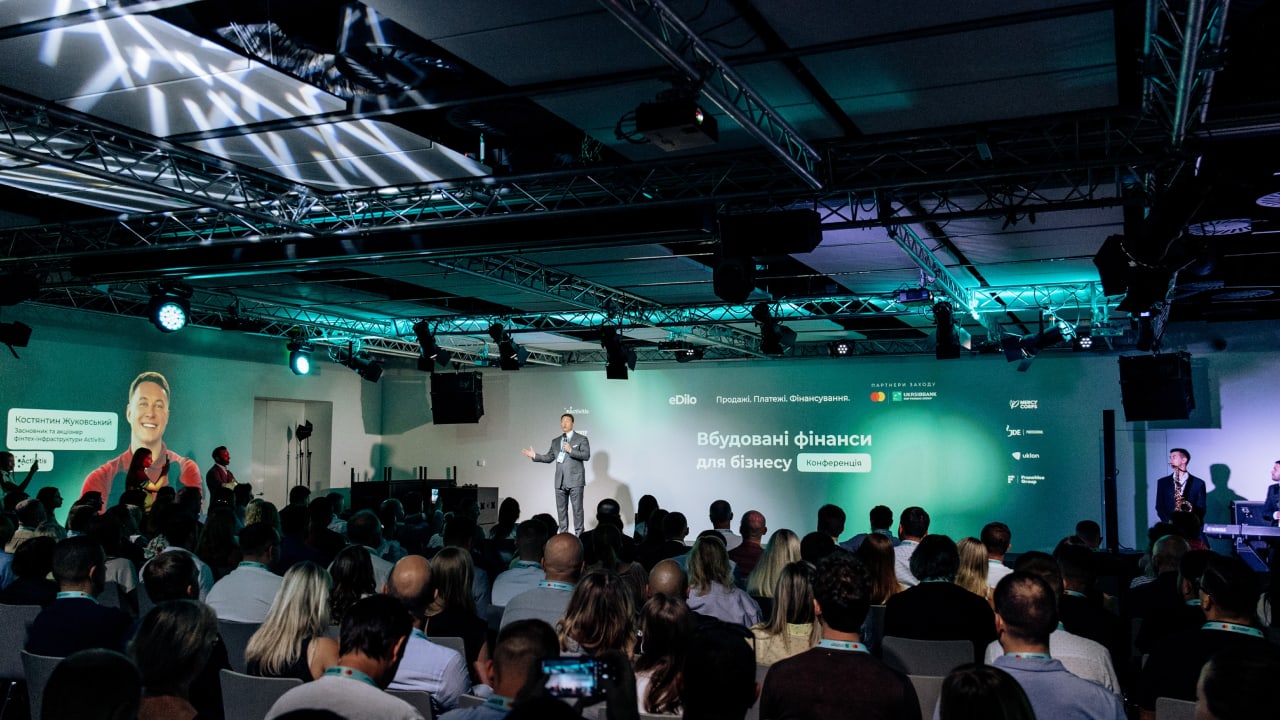
On August 18, a conference dedicated to embedded finance for businesses was held in Kyiv. More than 20 market-leading companies, 8 hours of discussions, and more than 300 guests—representatives from banks, financial and technology institutions, and micro, small, and medium-sized businesses—gathered to answer one question: how to provide businesses with access to financing directly at the moment a transaction is made.
The conference was organized by eDilo in partnership with Mastercard and UKRSIBBANK BNP Paribas Group. Representatives from Glovo, Epicenter, WOG, Uklon, and other leading Ukrainian and international companies participated in the event.
The program combined a strategic overview of the economy, financial innovations, and market trends with practical case studies on implementing embedded finance in real-world B2B models.
Funding Should Be Available to Businesses When They Need It
The central theme of the conference was embedded finance—a model in which a financial instrument is integrated directly into a business transaction: purchasing goods, paying a bill, acquiring equipment, or replenishing a corporate balance.
“Embedded finance isn’t just another credit product; it’s an entirely different architecture for businesses to access capital. When financing ceases to exist separately from the business process and becomes a natural part of it, entrepreneurs no longer need to seek out financing on their own. The system must be built around the people for whom it exists. And in our case—around Ukrainian entrepreneurs. Ultimately, our goal is very simple: to ensure that Ukrainian businesses grow faster than circumstances can slow them down,”— Konstantin Zhukovsky, founder and shareholder of Activitis.
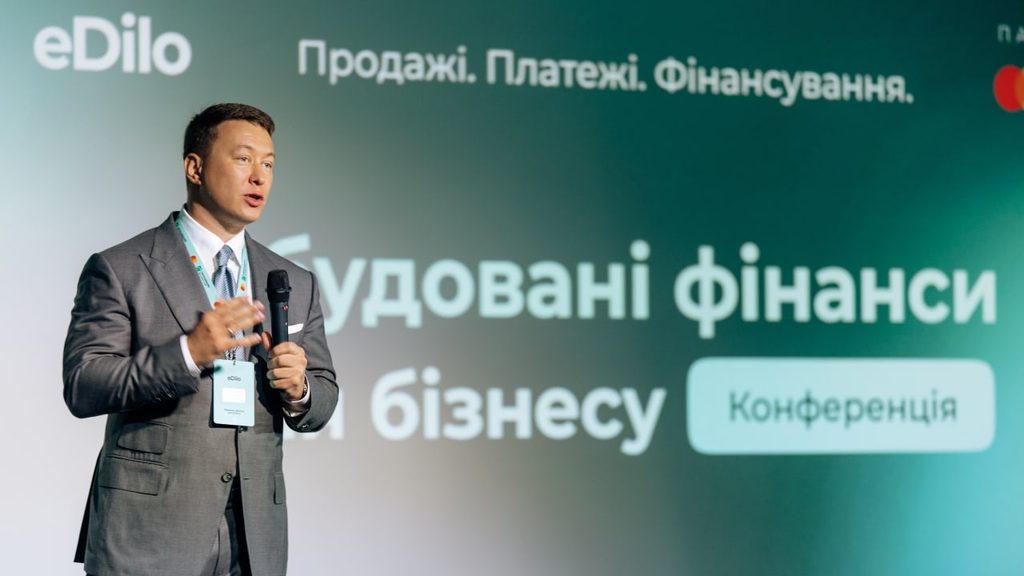
Conference participants noted that for Ukrainian businesses, it is no longer just access to capital that matters, but also the speed with which it can be obtained and the ability to utilize the funding without disrupting their usual business processes.
The role of digital platforms in financing small businesses emerged as a separate issue. Marina Pavliuk, CEO of Glovo in Ukraine, pointed out that platforms already have a significant amount of operational data on their partners—including sales, seasonality, demand, and mutual settlements. Such data can supplement traditional financial reporting when evaluating a business.
Andriy Kashperuk, Deputy Chairman of the Management Board of UKRSIBBANK BNP Paribas Group, presented the banking sector’s perspective on the issue. Some small business owners face challenges with accounting transparency or do not meet standard financing criteria, while the bank must assess the client’s ability to repay the funds.
Therefore, in his view, partnerships between banks and digital platforms, marketplaces, and large retail companies can supplement the risk assessment with data on actual transactions.
This model requires a clear division of roles. The bank is responsible for financial services, risk management, and regulatory procedures; the fintech company is responsible for the customer’s digital journey and integration; and the platform or merchant is responsible for knowledge of specific transactions and interaction with the entrepreneur.
It was precisely this partnership structure that UKRSIBBANK BNP Paribas Group, Mastercard, and Activitis presented at the conference.
Samvel Akobyan, CEO and co-founder of lilo, BuBiBo, and GridWe, expanded the discussion to the issue of the capital required to create large-scale technology ecosystems, manufacturing, and energy projects. He identified insufficient access to project financing as one of the key constraints to development. In his view, large-scale technology models require a combination of capital, high-quality data, user readiness, and government policy.
Mykola Solomiychuk, CFO of Uklon, highlighted the importance of the speed of management decisions and the predictability of the regulatory environment. For long-term business investments, it is important to understand the operating rules several years in advance, rather than relying on ad hoc incentives or exceptions.
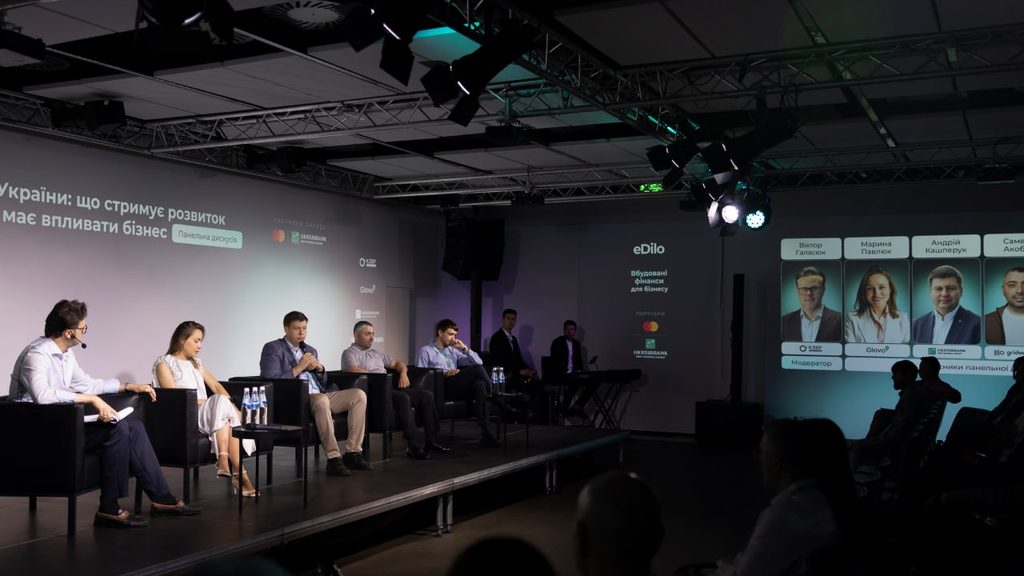
During the panel discussion, Viktor Halasyuk consistently steered the conversation back to the partnership model, in which the bank contributes capital and risk management expertise, the fintech company provides digital integration, and the platform has access to operational data and direct contact with the customer.
WOG, Epicenter, and UKRSIBBANK demonstrated how embedded finance is already working in Ukraine
A separate session of the conference was dedicated to practical models of embedded finance that Ukrainian companies are already using.
WOG and eDilo have integrated deferred payment directly into the corporate client’s business dashboard. A company can use its available credit limit to purchase fuel and pay later according to an agreed-upon schedule.
“Today, at WOG service stations, deferred payment is available alongside card payments and IBAN transfers. Customers can see their limit right away, fill up when they need fuel for work, and pay on their own schedule,”, – Oleg Kushil, Director of WOG’s Digital Transformation Division.
Epicenter Business and eDilo have integrated installment payments into online purchases for legal entities and entrepreneurs. According to Bogdan Pogorily, Product Owner at Epicenter Business, the solution has streamlined the customer’s journey from product selection to securing financing and placing an order.
The conference also featured a partnership model between UKRSIBBANK (BNP Paribas Group), Mastercard, and Activitis, which combines banking services, Mastercard’s technological expertise, and eDilo’s infrastructure.
Kateryna Ananyeva, Vice President of Client Consulting at Mastercard, presented the global context of embedded finance development. According to Mastercard data presented at the conference, the global embedded finance market continues to grow, while Ukraine has significant potential for developing such models.
Grant funding as a bridge to market-based financing
Activitis, in partnership with Mercy Corps as part of the BLOOM program and with financial support from the Government of the United Kingdom, is developing a model designed to expand access to financing for entrepreneurs in regions where traditional financial instruments remain limited.
Max Petrokofski, Head of the Recovery, Energy, and Economic Growth Division at the U.K. Government’s Foreign, Commonwealth, and Development Office (FCDO), announced the development of the program during the conference.
The model involves combining donor funding with private capital. As Iryna Khomenko, senior advisor for economic recovery at Mercy Corps, explained, this approach can lower the cost of financing and make it accessible to companies that find it more difficult to meet the standard requirements of financial institutions.
According to Pavlo Matiyash, CEO of Activitis, the main barriers for small and medium-sized businesses remain the lack of collateral or credit history, the complexity of procedures, and previous negative experiences with financial institutions.
From Financing Individual Transactions to Scaling a Business
Another focus of the conference was the use of financing to develop service-based and partnership-based business models.
Entrepreneurs from Universum Clinic, AUTONOVA-D, Mimibon, and STV Group discussed at what stage raised capital helps accelerate a strong business model and when it can turn into an excessive debt burden.
The discussion highlighted different approaches: some companies secure funding as early as the stage of developing a new model, while others do so only after validating their key business hypotheses. A common requirement remains the company’s ability to forecast the economics of its development and future cash flows.
Separately, Franchise Group and Activitis introduced the eFranchise solution, which combines installment payments for franchise setup services with financing for the expenses of franchise network partners—from equipment and renovations to raw materials and other operational needs.
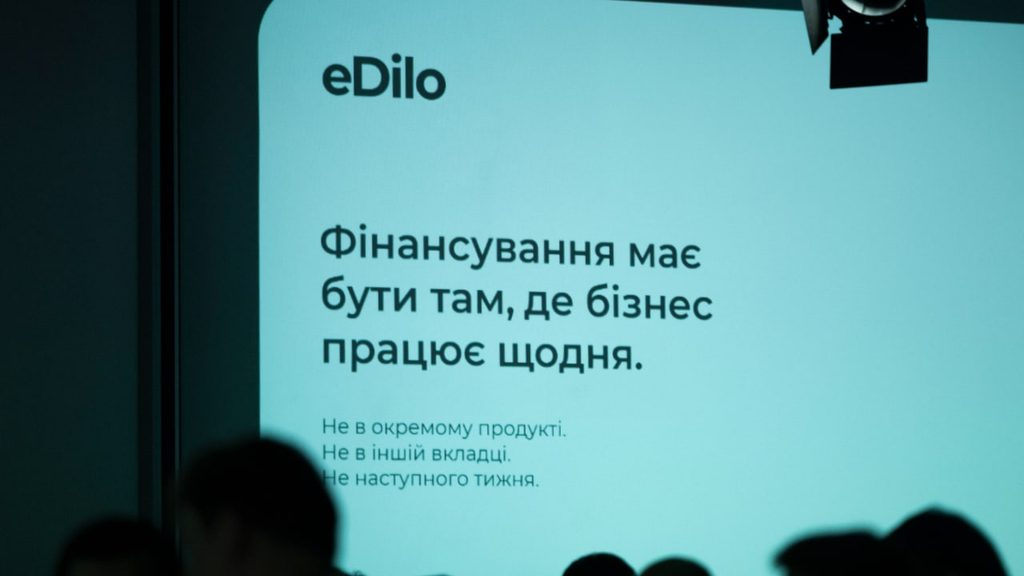
The Next Step: Finance Within Business Processes
The “Embedded Finance for Business” conference demonstrated that the Ukrainian market is gradually shifting from a model in which entrepreneurs seek financing separately to one where access to capital becomes part of the business operation itself.
Paying a bill, purchasing goods, topping off a fuel balance, buying equipment, or launching a new location can all take place alongside access to a financial tool—without having to interrupt the main business process.
It is precisely this architecture that could become one of the next stages in the development of financial services for Ukrainian small and medium-sized businesses.
Photos from the event are available at the following link: https://event.edilo.com.ua/#gallery
Background
eDilo is an online B2B BNPL service for businesses from Activitis. It integrates installment payments and deferred payments directly into B2B sales.
Activitis is a fintech infrastructure that creates embedded financial solutions for businesses, aimed at fostering entrepreneurship and supporting the recovery and growth of Ukraine’s economy.



More about business
and finance
Read more

Which Chinese Tractor Is the Best to Buy: Top 5 Models

Solar Panel Business: How to Set It Up and Calculate Liquidity

How to Choose a Business Idea in 2026: Top Ideas for Ukraine

Military Tax in Ukraine in 2025

A $5,000 Business in 2026: How to Start a Business with Minimal Risk

How to Prepare Your Business for Black Friday 2026: Purchasing Without Straining Working Capital

How to Prepare Your Business for the Fourth Quarter: A Financial Checklist for Executives

How to Avoid Stalling Business Growth Due to Large Supplier Invoices

How Businesses Can Prepare for the Peak Sales Season in Fall and Winter