Why July and August Are the Best Time to Upgrade Your Technology and Equipment

Most business owners start thinking about purchasing new equipment when their old machinery begins to cause problems. Production lines operate intermittently, maintenance costs rise, electricity consumption increases, and repairs are no longer economically viable. At this point, modernization shifts from a planned investment to a forced decision that must be made under pressure from circumstances.
That is precisely why companies should plan to upgrade their equipment before the start of the fall business season. The summer of 2026 presents several compelling reasons to do so. Scheduled repairs to Ukraine’s energy infrastructure are underway, businesses are preparing for potential peak loads in the fall, and equipment manufacturers and suppliers traditionally have fewer orders than they do in September or October. For businesses, this means more time to select equipment, faster delivery, and the opportunity to carry out modernization without rushing.
For many companies, the right timing of a purchase affects their financial results just as much as the choice of equipment itself. The difference between purchasing in the summer and in the fall isn’t just a matter of price. It’s about cash flow, how quickly new equipment can be brought online, the risk of downtime, and the business’s ability to operate continuously during the busiest time of the year.
Why is summer the best time to modernize?
The question of when it is best to upgrade equipment is much more important than it seems at first glance. Most companies consider only the purchase price, even though the timing of the purchase is just as important.
For many industries, July and August are relatively quiet months. Some manufacturing facilities operate with fewer orders, the corporate sector postpones the launch of major projects until the fall, and some companies use this period for equipment maintenance or employee vacations.
Installing new equipment is much easier in the summer. While even a single day of downtime in the fall can lead to disrupted deliveries or the loss of customers, in the summer a company has plenty of time to install the equipment, test it, train staff, and address any potential technical issues.
Another argument relates to preparations for the new production cycle. The company enters the peak season with its equipment already upgraded, rather than trying to modernize it when production is already at its peak.
This principle has long been used by large manufacturing companies. Scheduled upgrades, major overhauls, and the replacement of critical components are carried out specifically during periods of the lowest production workload. Small and medium-sized businesses can gain a similar advantage, even if they have only a few pieces of equipment.
Logistics Works in the Buyer’s Favor During the Summer
Seasonality is clearly evident in the operations of equipment manufacturers and distributors. Starting in September, most companies ramp up their investment programs, prepare for the end of the fiscal year, or launch new production projects. Demand for professional equipment is growing almost simultaneously across many industries. As a result, delivery times are increasing, inventory levels are declining, and manufacturers are operating at full capacity.
In July and August, the situation is different. Suppliers have more equipment available in their warehouses, fulfill orders more quickly, and can offer more flexible terms of cooperation. For the buyer, this means more than just saving time.
Some of the advantages of summer shopping include:
- Upgrading the company’s equipment before the start of the fall peak season.
- Lower risk of delays due to congestion in logistics chains.
- Faster installation and commissioning of equipment.
- A wider selection of models, trim levels, and optional features.
- The opportunity to calmly negotiate service terms, warranties, and delivery conditions.
If equipment is imported from Europe or Asia, the time factor becomes even more important. Logistics can take several weeks, so even a slight seasonal increase in demand can delay the launch of new equipment by nearly a month.
Financial Considerations: Investments Before the Start of the Fall Semester
For most companies, the cost of equipment has long ceased to be the sole criterion for decision-making. It is far more important to consider how the purchase will affect working capital and whether it will create a cash shortfall at a time when the business needs liquidity the most.
Operating expenses traditionally increase in the fall. Companies purchase raw materials, build up inventory, launch advertising campaigns, expand production, hire staff, or increase their purchasing volumes before the end of the year. If the need to make a one-time payment for expensive equipment is added to these expenses, the financial burden can increase significantly.
Let’s consider a simple example. A company plans to purchase equipment worth 2 million UAH. If the entire amount is paid up front, the available working capital is reduced by that exact amount. For the company, this means a smaller liquidity reserve, limited purchasing capacity, or the risk of a cash shortfall.
If the investment is spread out over 12 months, the average monthly payment will be about 167,000 UAH. For most companies, this burden is much easier to incorporate into their financial plan than a one-time withdrawal of two million hryvnias from the business.
That is precisely why financing equipment upgrades is increasingly viewed as a tool for managing liquidity and competitiveness. The company acquires new equipment when it is needed, while free capital continues to be deployed in its operating activities.
Another aspect that is often underestimated concerns the cost of postponing an upgrade. If new equipment can increase productivity by at least 10–15% or reduce operating costs, every month of delay means a lost economic benefit. Ultimately, the decision to “buy later” can end up costing more than financing the purchase itself.
Scheduled power grid maintenance: a good opportunity to check your own equipment
Summer is traditionally used by energy companies for scheduled maintenance of generating facilities and transmission grids. After several years of extensive damage to the energy infrastructure, such work remains critically important in preparation for the fall and winter months.
For businesses, this means only one thing: now is the best time to assess their readiness for potential power outages.
First and foremost, it is important to conduct an audit of the equipment that is most dependent on a stable power supply. In practice, it is during such inspections that companies identify components that have exceeded their rated service life or have long been in need of replacement.
It is advisable to pay special attention to:
- generators and backup power sources;
- battery systems;
- automatic reserve injection systems;
- equipment with the highest energy consumption;
- equipment that most often requires repair;
- ventilation and cooling systems.
Many companies focus solely on the risk of a complete production shutdown. However, businesses lose money much more often due to less obvious factors. Worn-out equipment operates more slowly, consumes more electricity, requires regular maintenance, and gradually increases the cost of production.
What does a business stand to lose by postponing modernization until the fall?
Putting off a purchase for a few months seems like a logical decision. However, in most cases, a company is not postponing the expense, but rather the achievement of results.
The consequences of such a decision accumulate gradually. First, the risk of unplanned downtime increases precisely during the period when the workload on the business is at its peak. If equipment breaks down in the fall, the company spends time on more than just repairs. It must also find a service center, order parts, arrange for the delivery of new equipment, and reorganize the production process.
Second, indirect costs increase. A single day of downtime means more than just lost revenue. The losses are compounded by the salaries of staff who cannot work, penalties for missed delivery deadlines, the loss of customers, and additional logistics costs.
Third, the company is entering a period of high demand with outdated equipment that is operating at the limits of its capacity. Under such conditions, even a minor breakdown can affect contract fulfillment and the company’s reputation.
That is why large companies have long viewed modernization as part of their risk management strategy. For small and medium-sized businesses, the same logic applies: it is cheaper to prevent downtime than to pay for its consequences.
How much does postponing an equipment upgrade actually cost?
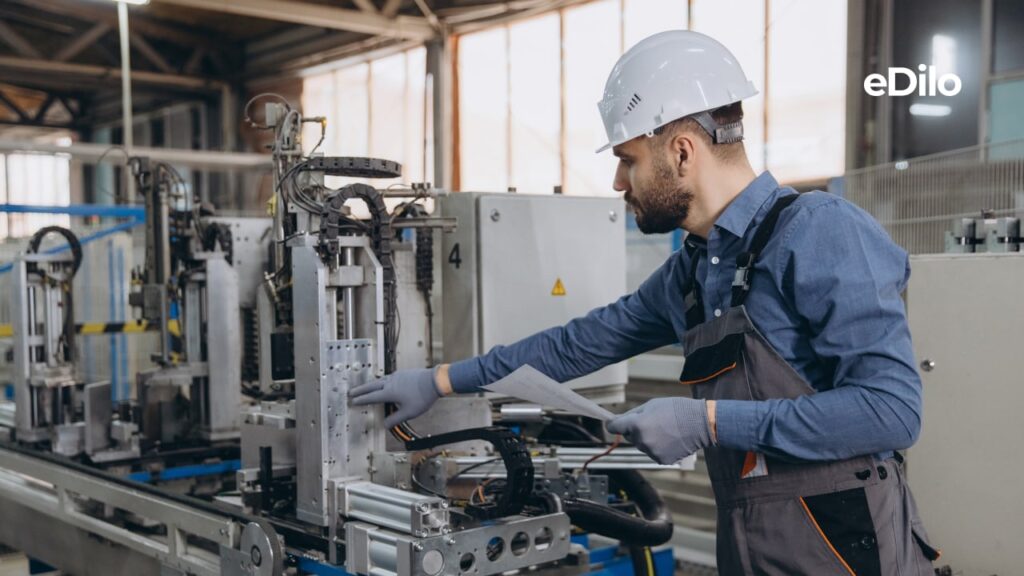
When a company postpones the purchase of new equipment, it usually seems as though it is saving money. In reality, the costs don’t disappear. They simply become less noticeable. Instead of making one large investment, the business gradually pays for repairs, downtime, increased energy consumption, and lost productivity.
According to international studies in the manufacturing sector, unplanned equipment downtime costs companies, on average, 5 to 20 times more than scheduled maintenance or timely upgrades. For small companies, the absolute amounts are lower, but the ratio remains the same: emergency repairs are almost always more expensive than scheduled equipment replacement.
Let’s imagine a manufacturing company that uses a machine tool worth about 2 million UAH.
| Potential losses | Estimated amount |
| Emergency Repairs | 80,000–250,000 UAH |
| Production downtime for 3 days | 300,000–900,000 UAH |
| Exceeding Order Fulfillment Targets After Repairs | 50,000–150,000 UAH |
| Penalties or Compensation for Customers | up to 200,000 UAH |
| The loss of one major customer | sometimes exceeds the cost of repairs |
Even if the equipment doesn’t break down, operating it can become increasingly expensive. Older models often consume more electricity, require more frequent maintenance, and their performance gradually declines due to natural wear and tear on their components.
For example, if a piece of equipment consumes just 15% more electricity than a modern equivalent, and the company’s monthly electricity bill is 120,000 UAH, it is overpaying by about 18,000 UAH each month. Over the course of a year, this difference exceeds 200,000 UAH—and that’s without factoring in repairs or downtime.
That is why large companies are increasingly evaluating not the price of equipment, but its total cost of ownership (TCO). This metric includes:
- the initial cost of the equipment;
- electricity costs;
- maintenance;
- spare parts;
- scheduled and emergency repairs;
- production downtime;
- service life;
- the residual value of the equipment after several years of operation.
This approach provides insight into the true economic value of the investment. In many cases, new equipment begins to pay for itself even before the payment schedule is complete, thanks to lower operating costs, higher efficiency, and a reduced risk of unplanned downtime.
For small and medium-sized businesses, this leads to a simple conclusion: the issue isn’t just how much new equipment costs. It’s much more important to understand how much the company is losing each month by continuing to operate with outdated equipment. It is precisely this amount that often becomes the main argument in favor of timely equipment upgrades for the business.
How can you upgrade your equipment without straining your working capital?
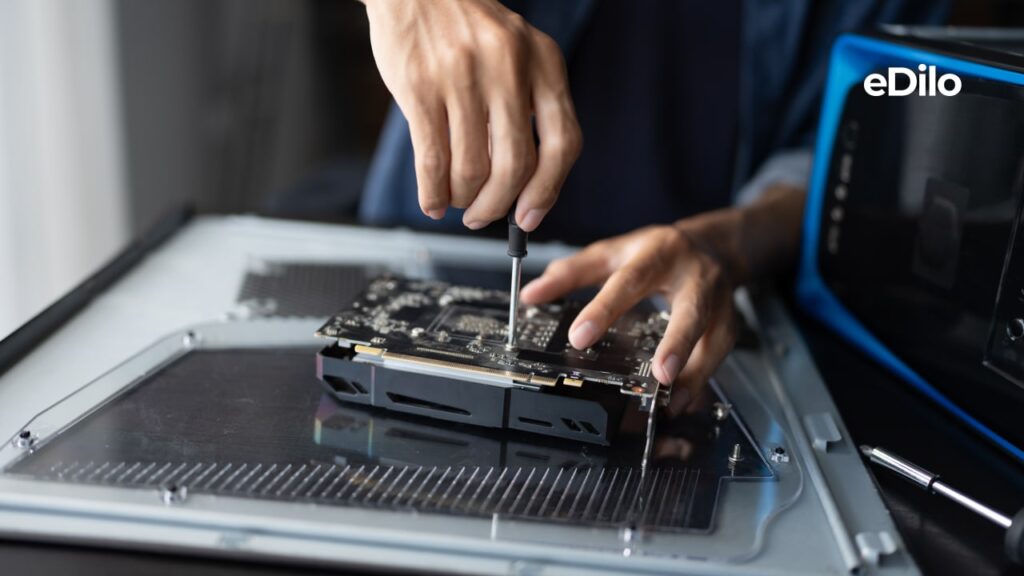
One of the most common reasons companies put off upgrading has nothing to do with the cost of the equipment. Often, a business has already selected a supplier, calculated the economic benefits, and understands that the new equipment will pay for itself. The obstacle is the need to set aside a significant amount of money all at once.
This is particularly critical for small and medium-sized businesses. Working capital supports a company’s day-to-day operations: purchasing materials, paying salaries, covering logistics, rent, taxes, and marketing expenses. If a large portion of funds is simultaneously allocated to purchasing equipment, the company’s financial flexibility is significantly reduced.
More and more companies are using business installment plans or payment in installments. This approach allows them to break down the investment into predictable monthly payments while immediately beginning to use the new equipment.
This is the main difference between deferred purchasing and modern financing tools. The company does not have to wait several months for the necessary funds to accumulate. It begins to reap the economic benefits of modernization today.
The online service eDilo operates on this principle. A company can purchase equipment on an installment plan without delaying the launch of a new project or the expansion of production. While the equipment is already generating revenue, the costs are spread out according to an agreed-upon payment schedule.
There is already a practical example of this approach among eDilo’s clients. The LeoDerm Medical Center purchased a Bi-One device worth nearly 2 million UAH through a 12-month installment plan for businesses. Thanks to this, the clinic was able to start using the new equipment immediately after installation, without tying up the entire amount in its business operations. This case study clearly demonstrates that financial instruments can accelerate a company’s growth just as much as investments in equipment themselves.
How should a company plan its equipment upgrades for the summer?
The most successful modernization projects almost never start with a purchase. They start with an analysis. The better a company understands its own costs, technical risks, and production processes, the faster its investments will pay off.
It is best to plan the upgrade several months before the start of the fall season. This allows enough time to select equipment, negotiate with suppliers, arrange delivery, install the equipment, and conduct a test run.
When planning, it is best to follow this sequence:
- Conduct an equipment audit and identify the equipment that most frequently requires repair or poses a risk of downtime;
- Analyze the costs of maintenance, spare parts, and energy consumption over the past 12 months;
- Assess how the modernization will affect productivity, product quality, or the speed of customer service;
- Compare offers from several suppliers before the fall surge in demand begins;
- Calculate the total cost of ownership for the equipment, taking into account not only the purchase price but also operating costs;
- Determine the optimal financing method so that the investment does not place an excessive burden on the budget;
- Schedule the installation and launch so that they do not disrupt core business processes.
This approach helps make decisions based on data, rather than waiting until equipment has already broken down. In addition, the company enters the fall-winter season with modern equipment, stable production processes, and predictable costs.
: Frequently Asked Questions
Why are July and August considered the best time to upgrade equipment?
During the summer months, many businesses operate at a lower capacity, making it easier to carry out installation, staff training, and equipment testing. In addition, suppliers often have better availability of equipment and shorter delivery times.
Why shouldn’t you put off the upgrade until fall?
In the fall, production workloads increase, delivery times lengthen, the strain on the company’s budget grows, and the risk of unplanned downtime rises. If equipment fails during this period, the losses can significantly exceed the cost of a scheduled upgrade.
How can you purchase expensive equipment without putting a significant strain on your budget?
If a company does not want to withdraw large sums from its working capital all at once, it makes sense to use the eDilo service. Paying in installments allows you to receive the equipment immediately and spread out the payments over a period that works best for your business.



More about business
and finance
Read more

Which Chinese Tractor Is the Best to Buy: Top 5 Models

Solar Panel Business: How to Set It Up and Calculate Liquidity

How to Choose a Business Idea in 2026: Top Ideas for Ukraine

Military Tax in Ukraine in 2025

A $5,000 Business in 2026: How to Start a Business with Minimal Risk

How to Prepare Your Business for Black Friday 2026: Purchasing Without Straining Working Capital

How to Prepare Your Business for the Fourth Quarter: A Financial Checklist for Executives

How to Avoid Stalling Business Growth Due to Large Supplier Invoices

How Businesses Can Prepare for the Peak Sales Season in Fall and Winter