Rules for Accounting for a Generator at a Company
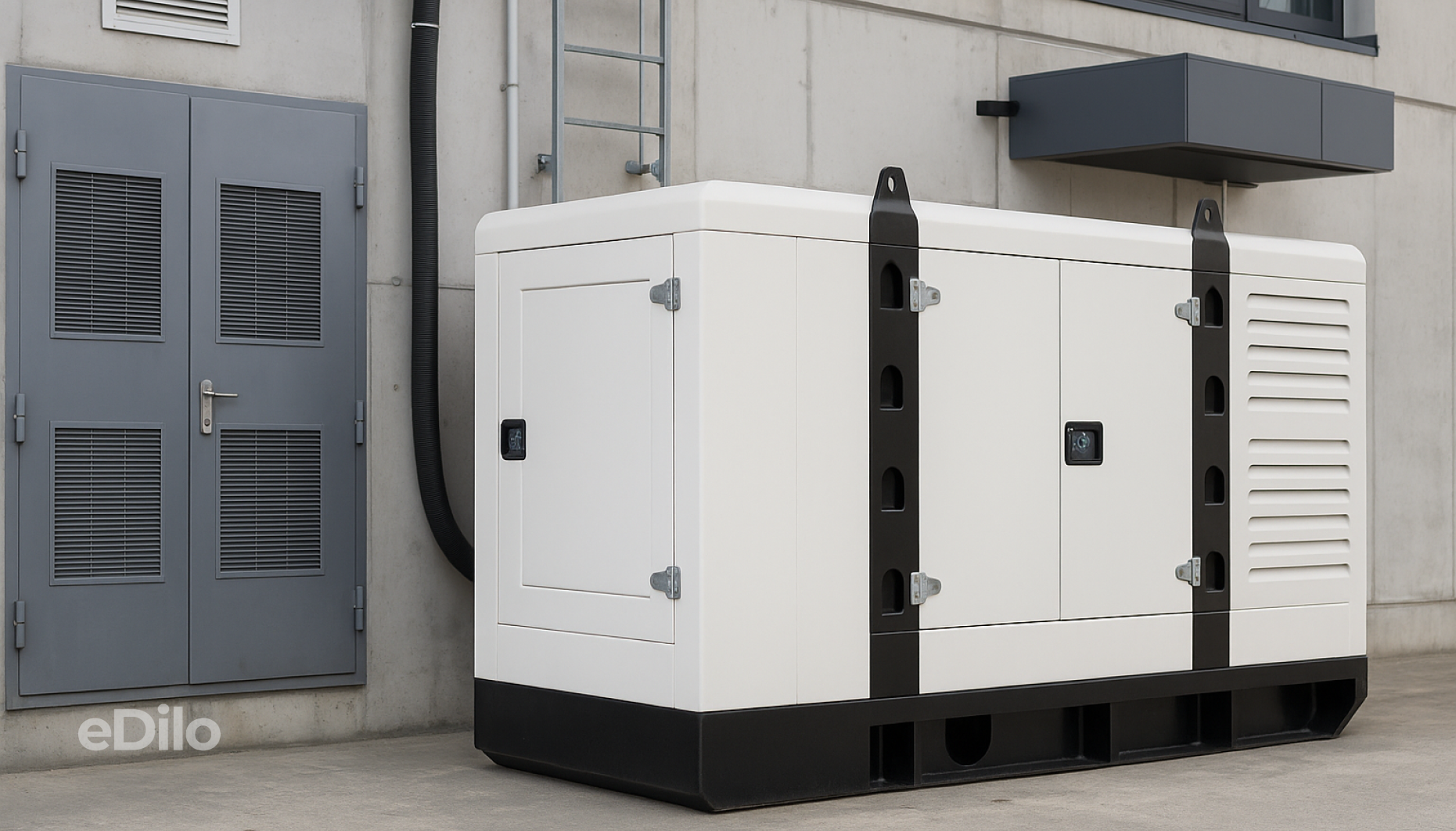
Power outages create not only technical but also administrative challenges—if a company has a generator, its accounting must take into account scenarios for its use, fuel storage conditions, and other details. Since the current situation in accounting and tax reporting is quite complex due to the 2022 and 2025 amendments regulating the use of generators during martial law, businesses often make mistakes that result in fines and other penalties.
In this article, we’ll explain how to properly account for generators and their fuel at a company, as well as how to handle depreciation and maintenance. This information will be particularly useful for managers, accountants, and finance professionals.
Determining the generator type for metering
Accurate accounting is possible only if the type of equipment and the generator’s usage scenario at the enterprise are determined in advance. Therefore, the first step is to evaluate the key criteria:
- Original cost:
- up to 20,000 UAH — low-value non-current tangible asset (LVNTA);
- more than 20,000 UAH — a fixed asset in accordance with paragraph 14.1.138 of the Tax Code.
- Estimated useful life:
- up to 12 months —if used repeatedly, the generator is classified as a low-value asset; if used seasonally or on a one-time basis to perform specific tasks, it is classified as “other tangible assets,” account 209;
- more than 12 months — a noncurrent asset in accordance with NAP(S)BO 7, para. 4.
- Purpose:
- For workshops and production —the generator is accounted for at the enterprise under the “Production Fixed Assets” section;
- For offices and support departments— administrative fixed assets.
- Physical characteristics. First and foremost, they affect the environmental collection and accounting of fuel. In other respects, accounting does not distinguish between generators based on fuel type, power output, or whether they are suitable for stationary installation.
Example. The company purchased two generators:
- Costing 125,000 UAH to power the assembly conveyor.
- Costing 12,000 UAH to power the client’s office.
A production generator is recorded in subaccount 104, “Machinery and Equipment,” while an office generator is recorded as low-value non-current assets in subaccount 112.
You can purchase a new generator for your business with payment in installments over up to 12 months through the online service eDilo. This is a quick solution that allows you to submit an application and receive a decision on whether to provide the service in just 30 minutes.
Registering a Generator
Even if you’re already using a mini power plant, you should know how to properly keep records of generators at your company. A quick check to ensure compliance with regulations and the correction of errors allows you to optimize your accounting and avoid fines.
First, you need to determine which account to post the generator to. You have four options:
- 104 “Machinery and Equipment” —for generators recognized as fixed assets.
- 112 “Low-Value Non-Current Tangible Assets” — for low-value non-current tangible assets (up to 20,000 UAH).
- 209 “Other Tangible Assets” — for generators used on a seasonal or project basis (rarely used in actual accounting).
- 281 “Goods in Stock” — for generators intended for sale.
The next step is to calculate the initial cost. According to paragraph 8 of NAS 7, it includes the purchase price, transportation and temporary storage costs prior to use, as well as installation, setup, and commissioning costs.
The following documents are used to register generators at the company:
- the director’s order on commissioning;
- acceptance and transfer certificate (OZ-1 or internal form);
- order assigning an inventory number;
- order appointing a person responsible for property;
- fixed asset inventory card (OZ-6 or electronic database).
Accounting for Depreciation Expenses
In accordance with paragraph 138.3.3 of the Tax Code, generators are classified in the fourth group of fixed assets at the enterprise. The minimum depreciation period for them is 5 years.
But paragraph 431 Section 4 of the Transitional Provisions of the Code allows for accelerated depreciation of assets put into service after January 1, 2020. This makes it possible to optimize the tax burden on profits in the first few years after purchasing equipment by increasing expenses.
A company may independently determine the depreciation method. The straight-line method is most commonly used—depreciating the asset in equal installments each month the generator is in use at the company. For example, 120,000 / 60 = 2,000 UAH per month. Production-based depreciation is also permitted—based on the number of engine-hours actually worked. For example, if the generator is rated for 5,000 operating hours, each operating hour will result in depreciation of 120,000 / 5,000 = 24 UAH.
An exception is the accounting treatment of generators classified as low-value non-current assets. In accordance with p .27 NAP(S)BO 7, their cost may be fully written off at the time of initial recognition or using the 50/50 method—50% in the month of initial recognition and 50% in the month of disposal.
The account used to record depreciation expenses depends on how the generator is used at the company:
- in manufacturing — 91;
- in offices, administrative, and support departments — 92;
- at retail locations and sales departments — 93;
- in reserve (temporarily not in use) — 949.
Fuel Accounting for the Generator
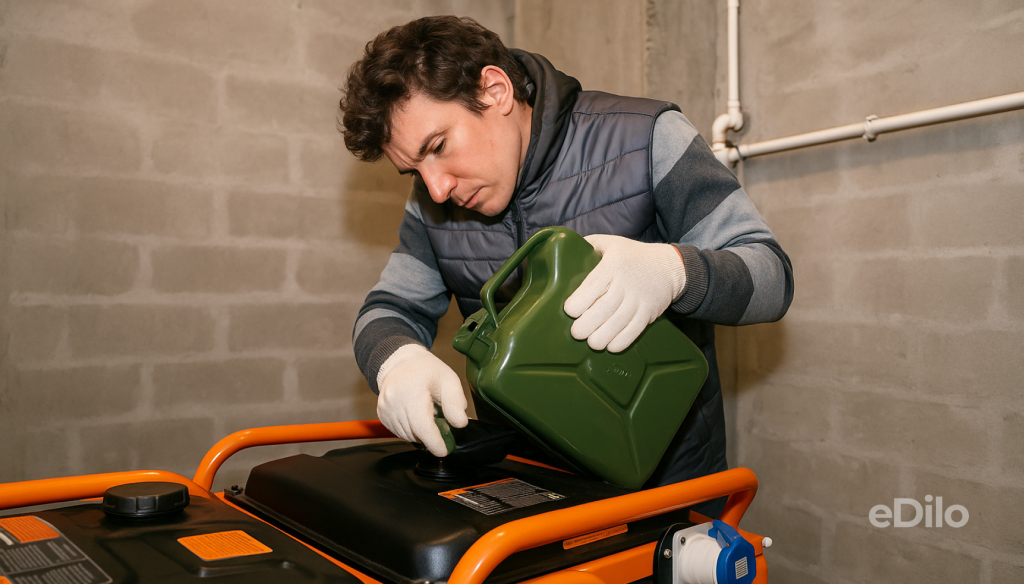
To understand how to record fuel for a generator, you need to start by tracking it. It is recorded as an asset in account 203 “Fuel” based on source documents—invoices, waybills, acceptance reports, and excise documents. If the fuel was purchased with cash, you must attach a fiscal receipt and a cash disbursement voucher.
It is important to understand that there are no general standards in Ukraine governing generator fuel consumption. The company must independently develop consumption standards, substantiate them with technical justification, and approve them with a corresponding order from management. This will help avoid discrepancies during inspections.
The same accounts are used to record fuel consumption as those used for generator depreciation:
- production — 91;
- administrative section — 92;
- Sales — 93.
To determine how to record fuel consumption for the generator, you need to maintain a generator log. This log records operating hours and actual fuel consumption, which are confirmed by the signature of the person in charge. When recording fuel consumption in the accounting records, fuel write-off forms signed by the responsible employee are used.
The eDilo online service will help you purchase not only a generator but also fuel for it, with payment in installments over up to 12 months. This is especially convenient for businesses with seasonal production cycles: you buy the amount of fuel you need now and pay for it over the course of the year.
Storage of Fuel for the Generator
On January 1, 2025, Law of Ukraine No. 3817-IX came into effect, establishing the following rules for the storage of petroleum products at private enterprises:
- The storage of fuel in household containers with a capacity of up to 60 liters (such as jerry cans) is not regulated in any way.
- It is permitted to store up to 2,000 liters in stationary containers, provided that the fuel is used exclusively for the enterprise’s own needs and is not intended for sale or distribution in any other way. In this case, the enterprise must maintain proper records of its generators.
- If a company stores more than 2,000 liters (or 5,000 liters in frontline zones as defined by Order No. 376 of the Ministry of Development dated February 28, 2025), it is not required to obtain a license during martial law. However, it must submit a declaration to the State Tax Service to have the data entered into the Unified Register of Fuel Storage Facilities. This is a quick procedure that does not require the payment of a state fee.
Please note! Thirty days after the end of martial law, the licensing requirement for businesses that store more than 2,000 liters of fuel is set to be reinstated. Although this is not an urgent matter, be sure to keep it in mind when maintaining your records.
Generator Maintenance Costs
Maintenance work is broadly divided into two groups, which makes it possible to distinguish their impact on the company’s generator accounting:
- Routine maintenance includes diagnostics, cleaning, replacement of consumables, and minor repairs that do not require complete disassembly of the equipment. These costs are recorded as period expenses and charged to the appropriate accounts: 91 for production, 92 for offices, and 93 for sales.
- Overhaul and modernization— replacement of key components, complete disassembly and reassembly, installation of modified parts, or expansion of the equipment configuration. For example, this could involve installing an automatic reserve feed-in unit (ARFU). In accordance with paragraphs 8 and 14 of NAP(S)BO 7, these costs are added to the initial cost of the equipment and are subject to depreciation.
Keeping track of a generator at a company requires storing the relevant documents—invoices for parts, materials, and disposable tools. If repairs are performed in-house, an internal maintenance schedule is used; if contractors are involved, work completion reports are used.
Generator Metering When There Are No Blackouts
If a generator is no longerin use at the enterprise, depreciation continues to be calculated according to the standard method. Paragraph 23 of NAS 7 stipulates that depreciation expenses must be recorded in account 949, “Other Operating Expenses.” However, the regulations do not prohibit continuing to record them in accounts 91–93 if the generator is constantly kept in a ready-to-operate condition.
When management decides to mothball a generator at the plant, the accounting treatment changes. Decommissioning allows the company to stop accruing depreciation expenses. To do this, the company must issue a management order, a decommissioning report, and documents confirming that the equipment cannot be used for its intended purpose—for example, documents regarding the transfer of the equipment to a warehouse.
Environmental Tax on Generator Use

On January 1, 2025, paragraph 46 of Section 5 of the Transitional Provisions of the Tax Code, which temporarily exempted businesses from the obligation to pay the environmental tax, ceased to be in effect. From now on, the tax is assessed according to the standard rules.
Ifa company hasan on-site generator, reporting is carried out as follows: the company files a tax return and registers the equipment. In accordance with Article 243 of the Tax Code, the environmental tax rate for this type of equipment is 30 UAH per metric ton ofCO2 emissions. The tax is recorded under the expense account selected for the generator—91, 92, or 93.
However, it is worth noting that the use of a generator at the facility with emissions of up to 500 metric tons of CO2 per year is not subject to taxation. To confirm this fact, the technical specifications, the generator’s operating log, and independent emissions assessments are used.
The issue of mobile facilities remains controversial. On the one hand, the law does not establish clear rules for their taxation; on the other hand, an inspection by regulatory authorities may deem them to be major polluters and impose a fine. Therefore, decisions are made on a case-by-case basis, depending on the circumstances.
Conclusions
In 2025, the company’s accounting for the generator will cover all key elements of financial and tax reporting. The main requirements include:
- determining the type of asset (fixed asset or low-value asset) and its initial cost;
- calculation of depreciation in accordance with the company’s accounting policies;
- documentation of fuel consumption records;
- accounting for maintenance costs;
- submitting declarations to the State Tax Service and registering fuel storage facilities in the Unified Register (for quantities exceeding 2,000 liters or 5,000 liters);
- Calculation of the environmental tax—without exemptions—effective January 1, 2025.
Accounting for the generator must be conducted in accordance with the applicable provisions of the Tax Code, NAP(S)BO 7, and related regulations.
The eDilo online service allows you to purchase a generator, fuel, and related equipment, as well as order installation and maintenance services, with payment in installments over up to 12 months. No collateral, no guarantors, and no red tape. You’ll receive the equipment immediately, and we’ll finance the transaction with the supplier by developing a convenient payment schedule tailored to your business.
Frequently Asked Questions
How is generator wear and tear accounted for?
For generators classified as fixed assets—on a straight-line basis (in equal monthly installments) or using the production method (based on engine-hours). For low-value non-current assets (LVNA)—100% in the month of commissioning or 50% in the month of capitalization and 50% in the month of write-off.
What are the labeling requirements for generators in accounting?
Each generator is assigned an inventory number, which is recorded in the accounting documents. It is recommended to physically mark the number (for example, with a sticker), maintain an inventory card, and designate responsible persons. To avoid errors, it is best to account for each generator individually, rather than registering them as a group.
How do I process the write-off of a generator?
You will need an order from the manager, a write-off report (Form OZ-3 or in any format), and a dismantling report (if the equipment is a stationary installation). If the write-off is due to the equipment being unserviceable, you must include a report from the commission or service center.
What are the specific accounting considerations for a leased generator?
If a generator is leased, it is not recorded on the lessee’s balance sheet. Accounting is limited to lease payments (accounts 92 and 94). The generator remains on the lessor’s balance sheet, and the lessor calculates depreciation independently.



More about business
and finance
Read more

Which Chinese Tractor Is the Best to Buy: Top 5 Models
Solar Panel Business: How to Set It Up and Calculate Liquidity

How to Choose a Business Idea in 2026: Top Ideas for Ukraine

Military Tax in Ukraine in 2025

A $5,000 Business in 2026: How to Start a Business with Minimal Risk

How to Prepare Your Business for Black Friday 2026: Purchasing Without Straining Working Capital

How to Prepare Your Business for the Fourth Quarter: A Financial Checklist for Executives

How to Avoid Stalling Business Growth Due to Large Supplier Invoices

How Businesses Can Prepare for the Peak Sales Season in Fall and Winter