A Guide to Instrument Sterilization Methods in Dentistry
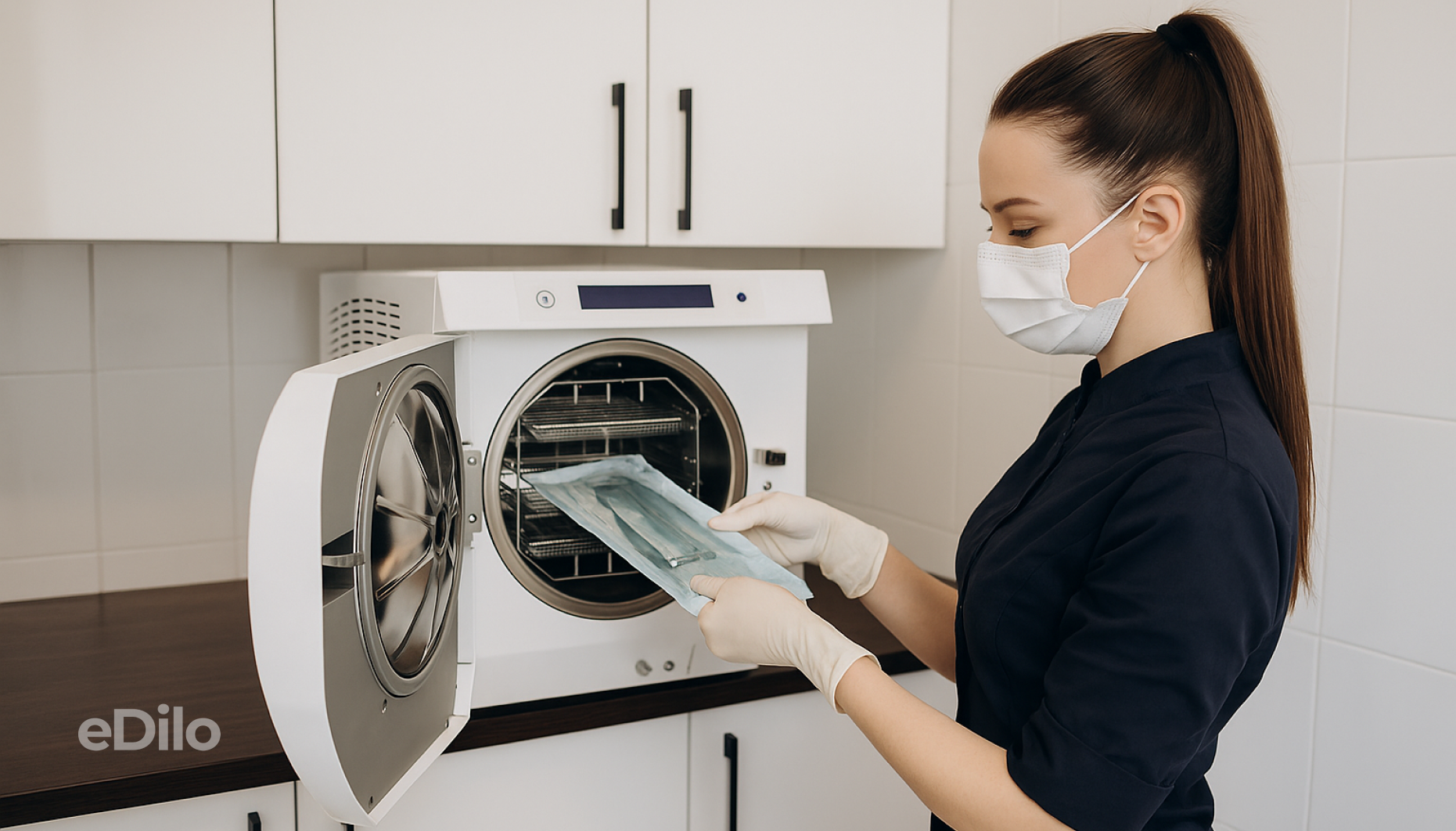
The safety of patients and staff in a dental practice depends to a large extent on how appropriately the instrument sterilization methods are selected. In this article, we’ll explore the main methods, their advantages, disadvantages, and areas of application. This information will be useful for dentists, clinical administrators, dental assistants, and anyone planning to open their own dental practice. You’ll learn which methods are best suited for different types of instruments, how to properly organize the sterilization process in the office, and which standards to follow.
Principles for Selecting a Sterilization Method in Dentistry
Choosing the right processing method directly affects the quality of disinfection and sterilization of dental instruments. The following are the basic principles that help determine the optimal methods for specific clinical settings:
- Material Considerations. Instrument sterilization methods are selected based on the instruments’ resistance to temperature, pressure, and chemicals. For example, heat-resistant instruments can be sterilized in an autoclave, while heat-sensitive instruments can be sterilized using gas or chemical systems.
- Based on the degree of contamination. For instruments that have come into contact with blood or mucous membranes, the most effective methods are used—usually steam sterilization under pressure. Preliminary disinfection is mandatory.
- Frequency of use. Reusable instruments require regular, rapid, and effective processing; therefore, methods with a short sterilization cycle—such as autoclaving or plasma sterilization—are chosen for them.
- Type of medical device. Complex instruments with detachable parts or hollow channels should be sterilized using a method that ensures deep penetration of the sterilizing agent—for example, an autoclave with a fractional vacuum.
- Compliance with regulations and standards. The sterilization method must meet all necessary requirements of the Ministry of Health, technical regulations, and international standards. This ensures the clinic’s legal protection and patient safety.
Adhering to these principles allows for the effective organization of the disinfection and sterilization process for dental instruments, minimizes the risk of infection, and ensures the highest standard of hygiene in the clinic.
Stages of Sterilization in Dentistry
The process of disinfecting and sterilizing dental instruments consists of clear, sequential steps. Adhering to these steps is key to preventing cross-infections, ensuring patient safety, and complying with medical practice standards:
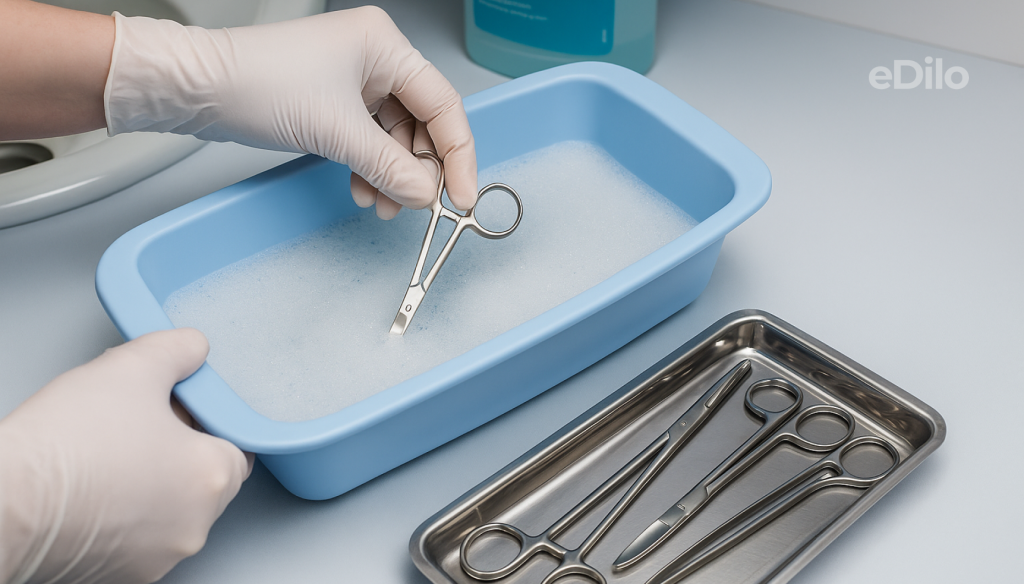
- Preliminary cleaning. Immediately after use, instruments are rinsed under running water or immersed in a special solution to prevent biological residues from drying.
- Mechanical cleaning. Instruments are cleaned manually with brushes or in ultrasonic baths to remove tissue residue, blood, and plaque.
- Disinfection. At this stage, certified chemical agents (solutions, tablets, or concentrates) are used to destroy pathogenic microorganisms.
- Drying and Inspection. After disinfection, the instruments are thoroughly dried and inspected for cleanliness, proper functioning, and integrity.
- Packaging. The instruments are packaged in special sterilization pouches, containers, or kraft paper, which helps maintain sterility until use.
- Sterilization. At this stage, specific methods are used to sterilize instruments—autoclaving (pressurized steam), dry heat, gas, or plasma sterilization.
- Storage. Sterilized instruments are stored in closed cabinets or containers in sterile packaging until they are used.
Reliable methods of instrument sterilization — are not only about patient care, but also the key to the clinic’s stable operation. The eDilo service helps healthcare facility managers organize their finances, control spending on sterilization supplies, and pay for professional equipment in installments—conveniently and cost-effectively.
Methods of Instrument Sterilization in Dentistry
Modern dentistry is impossible without reliable disinfection and sterilization of dental instruments. The choice of method depends on the material from which the instrument is made, the type of use, and infection control requirements. Below are the most common and effective methods for sterilizing instruments that are widely used in dental practice.
Steam Sterilization (Autoclaving)
It involves treating instruments with saturated steam under pressure at a temperature of 121–134 °C for half an hour. It is ideal for metal instruments, handpieces, mirrors, forceps, and the like.
The W&H Lisa and Mocom B Futura autoclaves are popular. They provide high sterilization efficiency, feature preset programs, cycle monitoring, and built-in printers for maintaining a processing log.
Gas sterilization (ethylene oxide or formaldehyde)
This method is used for heat-sensitive materials that cannot withstand high temperatures—such as plastics, rubber, and fibrous materials. Sterilization takes place at low temperatures (30–60 °C) with a long exposure time—ranging from 2 to 12 hours. It requires thorough degassing.
One of the well-known models is the Sterrad NX.
Chemical sterilization (immersion in disinfectant solutions)
Used for temperature-sensitive instruments—plastic parts, optical tips, and certain components of rotary equipment. Sterilization is performed by immersion in special solutions based on glutaraldehyde, hydrogen peroxide, or peracetic acid.
Popular products:
- Sekusept Aktiv (Ecolab);
- Sidex (Johnson & Johnson);
- Anolit Super.
This method requires precise control of the soaking time, the temperature of the solution, and the quality of the subsequent rinsing and drying.
Plasma Sterilization
One of the most advanced methods, which uses hydrogen peroxide in a vapor state, activated by radio waves, to sterilize instruments at temperatures up to 50°C. Suitable for all heat-sensitive items.
The following are considered popular pieces of equipment:
- Sterrad 100NX;
- PlazMax P150.
This is a method often used in premium-segment dental clinics, where expensive electronic equipment or high-precision instruments are handled.
Conclusion
Not only the health of patients but also the clinic’s reputation depends on the correct selection and adherence to standards for the disinfection and sterilization of dental instruments. Modern methods make it possible to process even the most complex instruments with a high degree of reliability. The eDilo online service can help improve internal business processes, including cost planning and the procurement of sterilization equipment or disinfectants. This solution allows you to pay for the necessary equipment in installments without sacrificing liquidity, while also providing flexibility, automation, and transparency in financial operations for a modern medical facility.



More about business
and finance
Read more

Which Chinese Tractor Is the Best to Buy: Top 5 Models

Solar Panel Business: How to Set It Up and Calculate Liquidity

How to Choose a Business Idea in 2026: Top Ideas for Ukraine

Military Tax in Ukraine in 2025

A $5,000 Business in 2026: How to Start a Business with Minimal Risk

How to Prepare Your Business for Black Friday 2026: Purchasing Without Straining Working Capital

How to Prepare Your Business for the Fourth Quarter: A Financial Checklist for Executives

How to Avoid Stalling Business Growth Due to Large Supplier Invoices

How Businesses Can Prepare for the Peak Sales Season in Fall and Winter